
Straightforward guidance, not a remote diagnosis. Vehicle symptoms can have multiple causes. If driving feels unsafe, stop in a secure place and arrange hands-on help.
Start with what happens when you turn the key
A rapid clicking sound, dim interior lights or no electrical response often points toward low battery voltage or a poor connection. One solid click with normal-looking lights can suggest a starter-circuit concern, while normal cranking without the engine starting points in a different diagnostic direction.
Symptoms overlap, so sound alone should not be treated as a final answer. Battery condition, cable connections, starter operation and charging output work as one system.
Clues that the battery may be weak
Batteries lose capacity with age, temperature changes and repeated short trips. A jump start that gets the vehicle running does not prove the battery is healthy or identify why it discharged.
- Slow cranking, especially after sitting
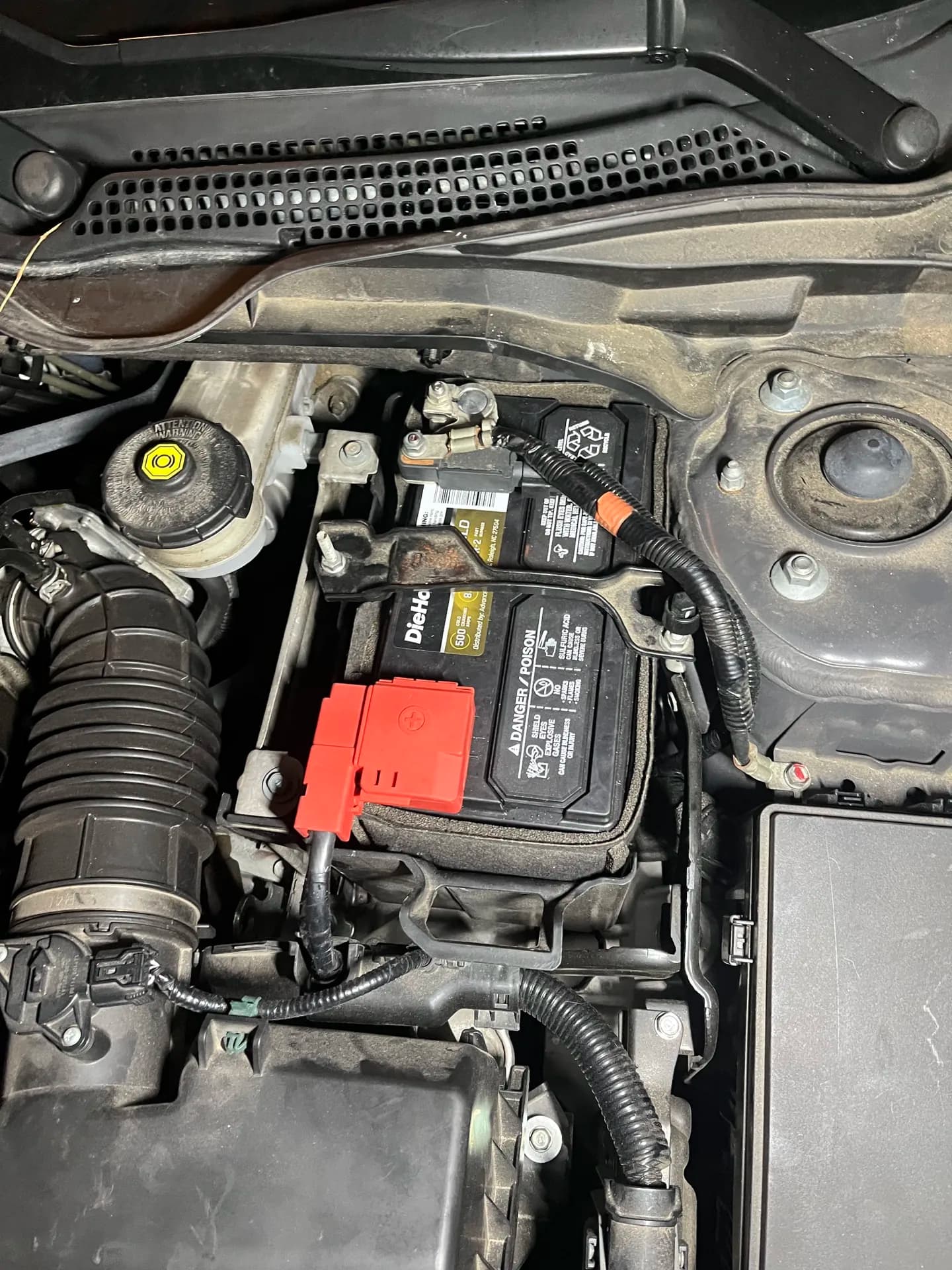
- Corrosion or loose battery connections
- A battery several years old
- Repeated need for a jump start
Clues that charging or starting needs diagnosis
If the vehicle starts after a jump but soon stalls, the battery light remains on, lights change brightness with engine speed or the new battery keeps going dead, the charging system or an electrical draw may be involved.
A starter can also fail intermittently. Testing voltage, voltage drop, battery capacity and charging output helps separate the possibilities before parts are replaced.
Test first, then decide on the repair
Replacing the battery without checking the rest of the system can leave the original problem unresolved. A practical mobile visit can test the battery and charging system where the vehicle is already parked.
Wayne provides jump starts, battery testing, replacement support and no-start diagnosis in Westerville and the Columbus area. Share what the vehicle does, how long it has been sitting and whether any warning lights appeared before it stopped starting.